Role: Project Manager / Civil Site Engineer | Duration: Apr 2018 – Aug 2021
Project Value: SAR 30M
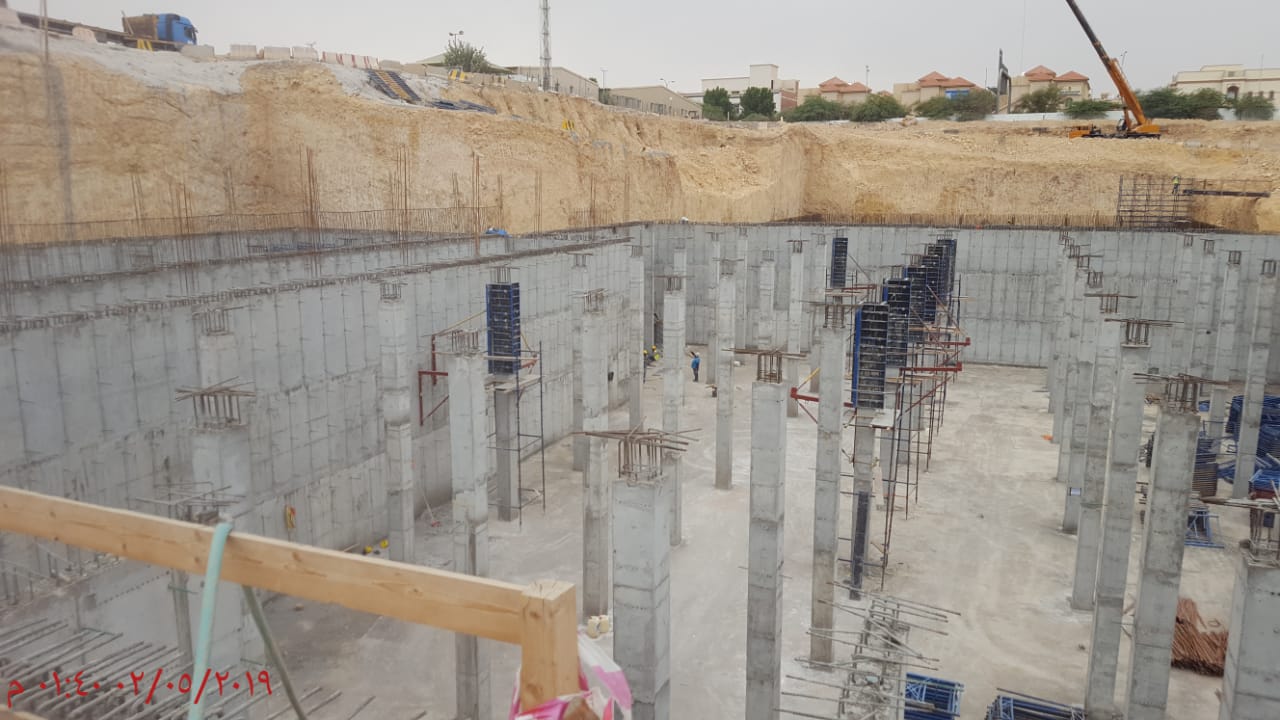
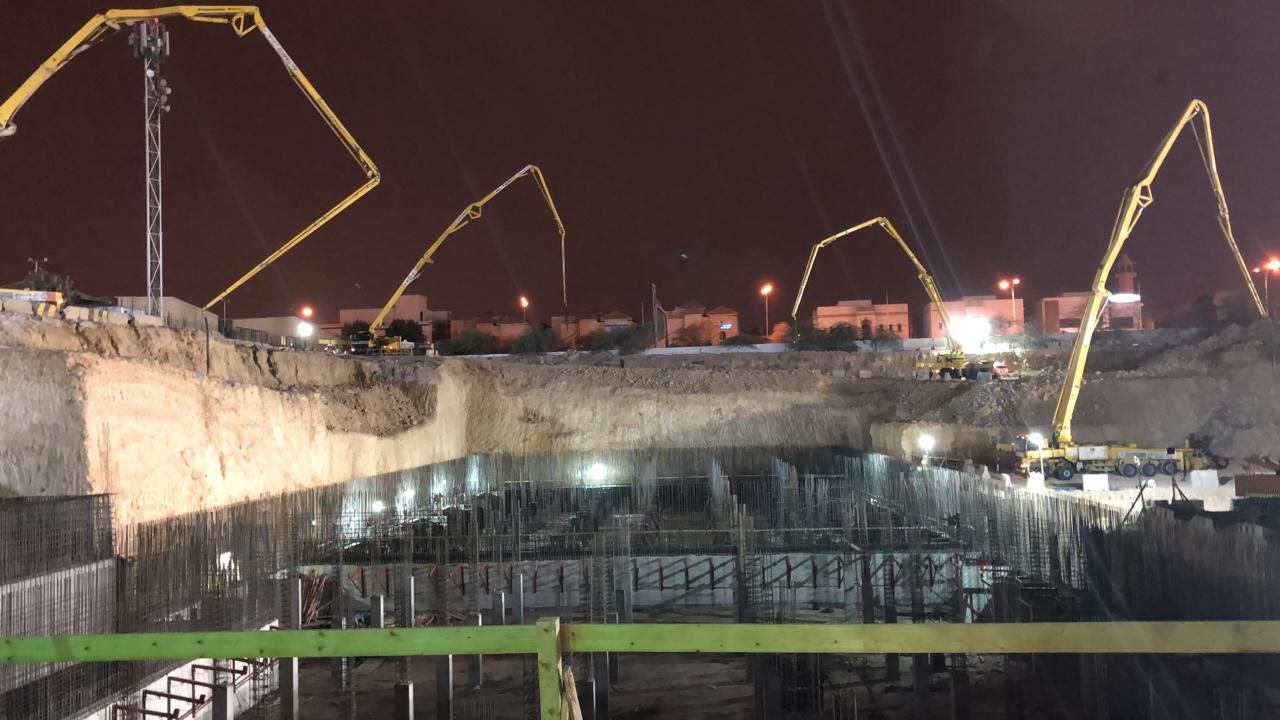
Delivering a 2,000,000-litre underground water tank on the KFSH&RC campus required a 12-meter deep excavation within a highly constrained, operational hospital environment. The comprehensive civil scope encompassed excavation under strict safety protocols, the detailing and placement of 210 tons of steel reinforcement, and the execution of 9,850 cubic meters of concrete operations. Subsequent phases included meticulous joint treatment to ensure water-tightness, controlled curing, and rigorous hydrostatic testing prior to final handover. Successful execution demanded the disciplined sequencing of temporary works, continuous protection of live utilities, and strategic access management, all while maintaining strict compliance with the hospital's ongoing operational requirements.
Quantified Outcomes
- 2,000,000 L tank capacity
- 12 m deep excavation
- 9,850 m³ concrete
- 210 tons reinforcement steel
- Full water-tightness testing and handover
Key Challenge & Resolution
Executing a deep excavation within an active hospital campus introduced a complex risk profile. This environment demanded precise management of temporary works design, continuous utility protection, and coordinated access for heavy equipment, all while upholding strict safety standards under schedule pressure. Strategic sequencing served as the critical variable; the exact timing of excavation stages, shoring, dewatering, and concrete pours dictated the safe progression of the site.
Mitigating these operational risks required rigorous control over the execution plan. Temporary works and utility clearances were thoroughly verified prior to releasing any new excavation stage, supported by mandatory inspection gates at every hold point. Furthermore, achieving structural water-tightness relied on the disciplined treatment of construction joints and controlled curing protocols. A comprehensive testing strategy was integrated directly into the initial execution sequence, ensuring quality compliance well before the final handover phase.
My Role vs. The Team
I led execution planning, site control, inspections, documentation, subcontractor coordination, and resource management, partnering with survey and QA teams to drive closure across all phases from excavation through testing.